The Pendle method

Our calibration

Every Pendle file is calibrated in-house by Martin Westwell. This is how.

OEM Plus

We start from the manufacturer’s own calibration and put our tuning on top.

  • No hardware changes.
  • Emissions control equipment is never altered.
  • The manufacturer’s protection maps are never altered.
  • Everything stays within the safety limits of the vehicle’s hardware.

Clean, correct combustion for correct power delivery – with emissions equal or better after tuning.

The whole vehicle

We calibrate the engine and the complete vehicle. Change one map and you need to know what it does to the next – and how it feels when you drive.

Every throttle position, every rpm

Smooth, linear power across the full rev range and the whole driving cycle – the way you actually drive.

On the dyno

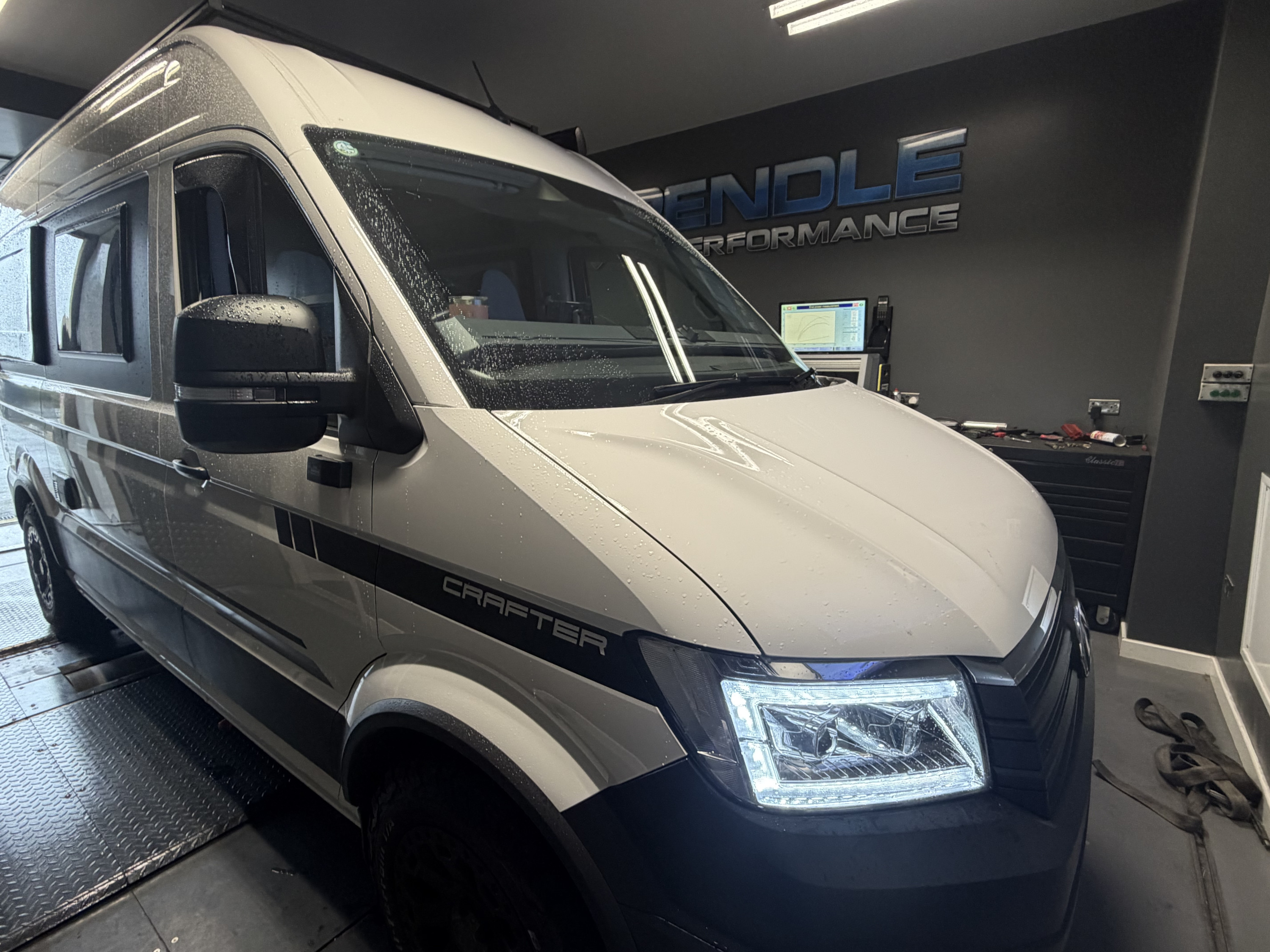
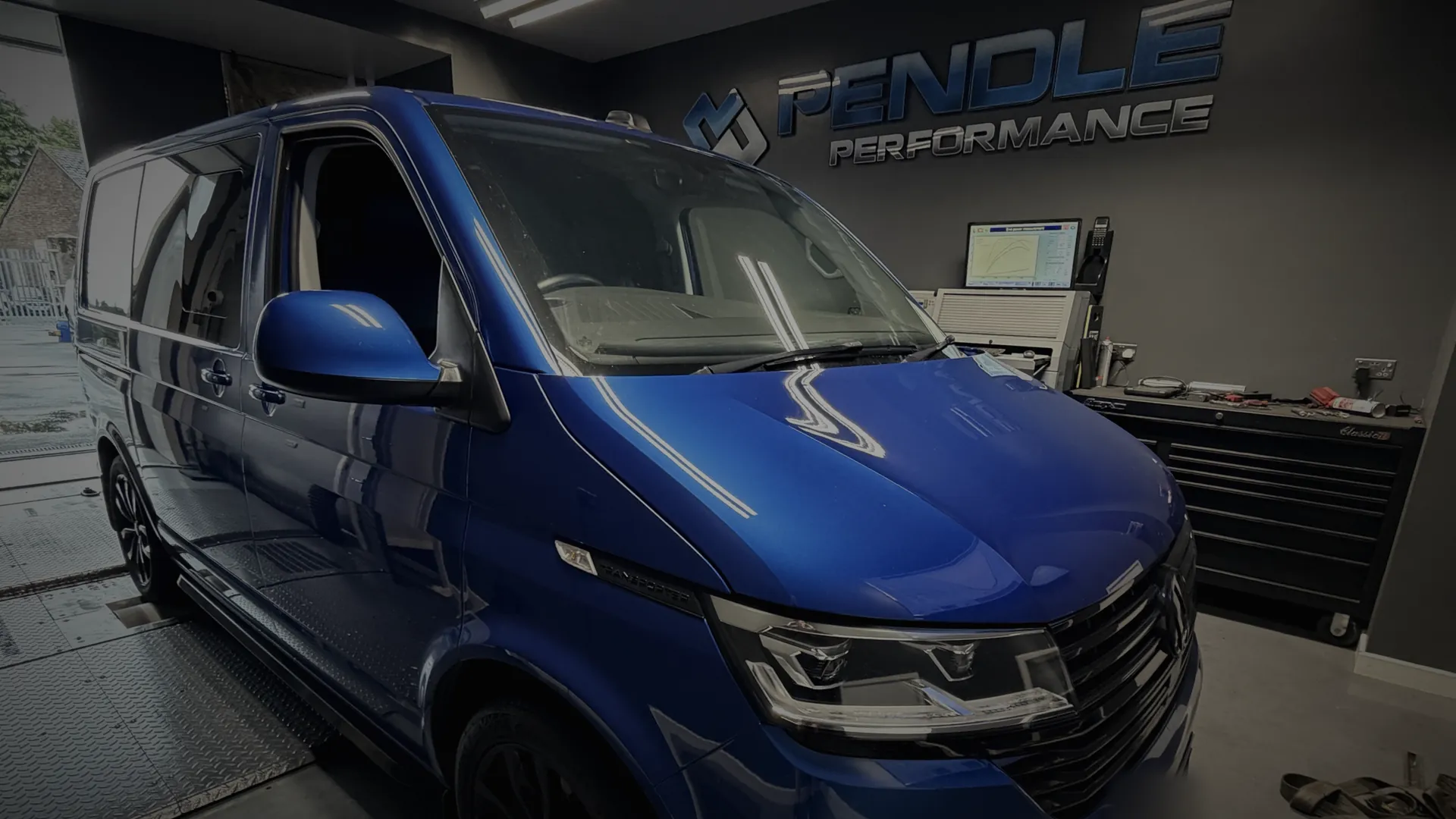
Every job at Pendle HQ starts with a full health check and a dyno run. Our Maha MSR500 is a four-wheel-drive dyno with linked roller sets: the front and rear roller speeds are electronically synchronised, so modern four-wheel-drive and torque-vectoring systems are tested safely, with no strain on transfer boxes or gearboxes.

It has three eddy-current retarders – two on the rear roller set, one on the front – so a vehicle can be held at a set rpm, speed or load for steady-state tuning. It sits in a sealed, air-controlled cell that simulates around 140 mph of airflow, and power figures are corrected to DIN 70020.

Then it’s data logged and driven on the road. We don’t stop until the calibration is right.

Checked with a data log

Before and after every tune the vehicle is data logged on a full-throttle pull. We check the boost the engine asks for against the boost the turbo delivers, the fuelling and the rail pressure, right through the rev range – so the engine is calibrated correctly and stays inside its limits.

“It’s not about finding the limits, it’s working within the limits.”

Data log chart: boost pressure asked for and delivered, and fuel rail pressure, from 1,100 to 4,200 rpm on a standard VW Transporter T5 2.0 TDI 102PS
A real standard log: VW Transporter T5 2.0 TDI 102PS (Bosch EDC17), full-throttle pull in 3rd gear.

Turbo in control: boost within 0.05 bar of the request from 2,000 rpm.

Boost

1.30 bar

peak delivered

Fuelling

46.2 mg

peak, per stroke

Rail

1,639 bar

asked for 1,635

What will it make?

“I don’t know until it’s on the dyno. Every vehicle differs – that’s why each one is individually calibrated.”

There’s one way to tune an engine: correctly and perfectly balanced.

In-house, in WinOLS

Martin has used WinOLS, the professional calibration software, for nearly 20 years. It shows the whole binary file, in multiple formats.

Research and development

  1. Research. Before we tune a new vehicle, we learn everything about the engine: the turbo, the injectors and its limits – is it the engine or the gearbox? We identify the ECU, work out how to read and write it, and map out its calibration areas.
  2. Development. Tune, test, data log, analyse, refine – and test again, until it’s right.
  3. Your engine. A fully custom-tuned engine, with all that research and development behind it.

Where it started

Martin started at 16, building and tuning engines for Peugeot Talbot – blueprinting engines, porting and boring heads. As engines moved to electronics, he moved with them into software. 38 years on, he still calibrates every Pendle file himself.

Not just work

“This is what I enjoy. It’s not just work – it’s my hobby. I thrive off the technology side of tuning engines.”

Without our customers we wouldn’t have a business. Each and every engine gets maximum effort.

Find your vehicle Book at Pendle HQ Find your nearest agent